🧐 Estimated read time | 9 minutes
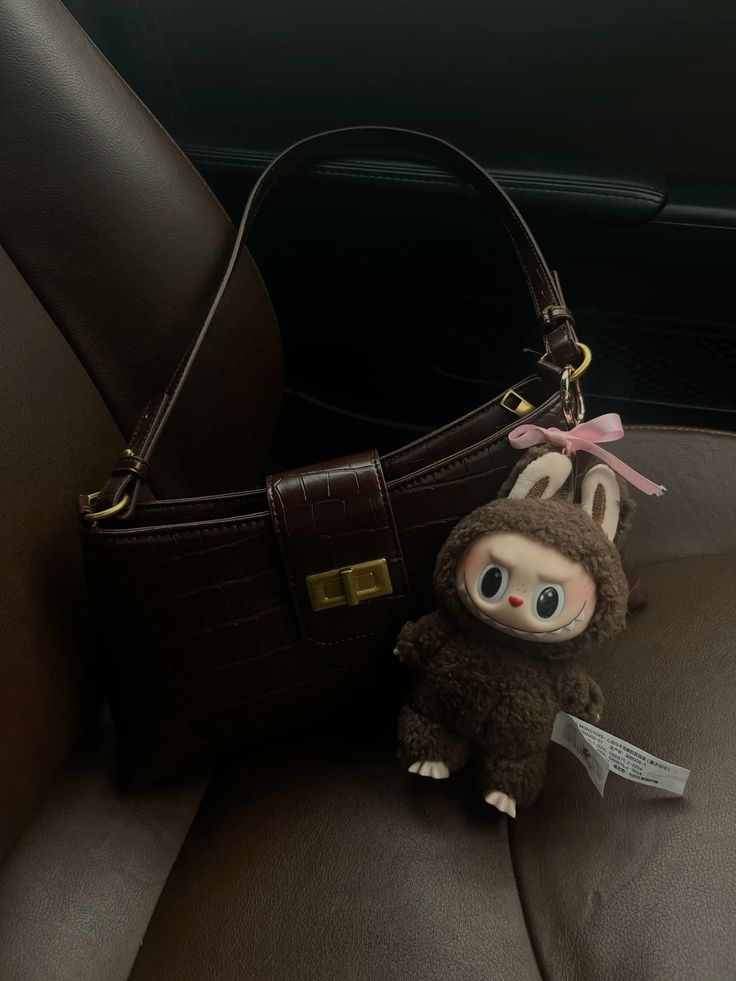
Picture this: a plush, pointy-eared bunny-elf with a devilish grin, dangling from a Hermès Birkin, perhaps wearing a tiny Cartier bracelet or faux Louis Vuitton bucket hat. Is it adorable? Ugly? Completely unhinged? Depending on whom you ask, Labubu is all of these — and that’s precisely the point.
Labubu, the child of Hong Kong–born, Netherlands–raised artist Kasing Lung, began life in 2015 as part of his “Monsters” graphic novels, inspired by Nordic folklore. What started as a quirky side character has become a global sensation, conquering TikTok feeds, luxury runways, and high-street vending machines alike. But this isn’t just a story of a cute toy gone viral; it’s a masterclass in modern marketing, hype culture, and the psychological need to belong.


With profits tripling in a year, resale prices soaring past $30,000, and Pop Mart’s valuation overtaking major toy giants, Labubu isn’t just a toy — it’s a billion-dollar cultural phenomenon. And if you’re wondering how to bottle that magic for yourself… just wait for the final chapter
The unexpected appeal of the “ugly-cute”
Labubu’s aesthetic is deliberately ambiguous: half creepy, half cuddly, wholly collectible. It’s that tension — the “ugly-cute” paradox — that fuels its universal magnetism. At first glance, you might wonder who in their right mind would pay hundreds (sometimes thousands) of dollars for a snaggle-toothed plushie. But dig deeper, and you’ll find the story of every hit collectible from Beanie Babies to Birkin bags: scarcity, exclusivity, and status signaling.
These days, being part of an “in-the-know” micro-community is often more valuable than the object itself. And Labubu provides a fast pass to exactly that. In a world where authenticity and community reign supreme, this mischievous elf became a golden ticket to a global club of insiders — no words needed, just a plush monster peeking out of your tote
The numbers behind the madness
Labubu isn’t just a cultural phenomenon — it’s a financial juggernaut. In 2024 alone, Pop Mart’s profits nearly tripled, powered largely by Labubu’s meteoric rise. The company’s shares have soared more than 500% since its 2020 Hong Kong IPO, a performance that outpaces many luxury giants.
Pop Mart now operates over 2,000 vending machines (“roboshops”) globally, along with retail stores and pop-ups in more than 30 countries, including heavy-hitting fashion capitals like London, Tokyo, and Paris. In fact, sales from outside mainland China accounted for nearly 40% of total revenue in 2024, underscoring Labubu’s rapid global conquest.
And it doesn’t stop at plush toys. Auction houses and resale platforms are cashing in:

A human-sized Labubu recently sold for over $150,000.
At Pharrell’s Joopiter auction, a bright green Labubu dressed in a custom Sacai x Carhartt WIP jumpsuit fetched a jaw-dropping $31,250.


Meanwhile, on platforms like StockX, rare “chaser” versions regularly trade hands for $500 to $6 000 — sometimes even higher.
Pop Mart’s valuation recently climbed to $38 billion, surpassing Barbie’s Mattel, Nerf-maker Hasbro, and Hello Kitty owner Sanrio combined. Not bad for a toy that looks like it might have crawled out of a Tim Burton fever dream.
But it’s not all roses and Birkins — counterfeit versions, affectionately dubbed “Lafufus,” have flooded markets from Canal Street to online resale sites. Chinese customs alone seized over 70,000 fake dolls in a single week. Rather than dampening demand, this underground “fugazi” economy has become part of the legend, spawning a meta-collecting culture of its own.
When a plush monster can move global stock markets and rewrite retail strategies from Tokyo to Toronto, you know you’re dealing with more than a fad — you’re looking at a full-blown economic ecosystem..
The psychology of the blind box
Let’s talk strategy. Pop Mart, the Chinese toy titan behind Labubu’s retail explosion, didn’t just sell toys — they sold surprise, risk, and dopamine. The “blind box” system means you never know which version you’ll get until you open it. There’s a 1 in 72 chance you might land a rare “chaser” edition, and that one-in-a-million feeling is a marketing jackpot.
This approach isn’t new — think baseball cards or Pokémon packs — but Pop Mart refined it for the digital age. The rush of the reveal, the social bragging rights, the endless TikTok unboxings — all of it ties into behavioral economics and our primal craving for unpredictability (the same mechanics behind gambling and loot boxes). From a marketing perspective, it’s genius: it turns every purchase into an event and every customer into a content creator.
Scarcity: The eternal allure

Labubu isn’t alone in weaponizing scarcity. From Supreme’s “drop” culture to the Hermès Birkin’s infamous waitlists, manufactured unavailability has long been a marketer’s sharpest blade. By controlling supply and stoking demand, brands don’t just sell products — they sell the fantasy of access.
Labubu capitalized on this strategy to perfection. Long queues, sold-out vending machines (“roboshops” from Beijing to London), limited drops at 5 a.m., and resale markets where prices balloon to four figures — it all cultivates an aura of almost mythical desirability.
In short, if everyone can have it, no one really wants it. If no one can have it, everyone must.
From kids’ toy to luxury accessory
It’s almost poetic: a monster bunny once meant to amuse kids in a picture book now flaunts designer jewelry on red carpets. Rihanna, Dua Lipa, Cher, and David Beckham (thanks to his daughter) have all co-signed the Labubu movement.

Meanwhile, TikTok influencers coordinate tiny designer outfits for them, pairing them with Birkins and Van Cleef Alhambra bracelets. It’s like seeing your childhood imaginary friend suddenly become an It Girl in Paris Fashion Week street style shots.
In a time when status is increasingly signaled through subtle codes — the quiet luxury cashmere coat, the unbranded but astronomically priced leather loafer — Labubu gleefully flips the narrative. It’s loud, it’s weird, it’s borderline tacky, and yet it’s unmistakably cool. Why? Because it’s unexpected. Because it’s a conversation starter. And because owning one signals you’re riding the wave before it crashes into the mainstream.
The grown-up embrace of childlike wonder
Malcolm Gladwell might call Labubu a “tipping point” moment for adult toy fandom. In a stressed, hyper-productive society, embracing a plush monster offers a comforting wink at childhood innocence — all while flexing your place in a global subculture. It’s therapy and flex in one.
Beyond the psychological comfort, there’s the marketing brilliance: Labubu creates a narrative around each owner. You didn’t just buy a toy — you participated in a global treasure hunt. You queued at 3 a.m., stalked TikTok live drops, or shook boxes in a Pop Mart store in Singapore hoping for a “chaser.” You earned it. And in the modern economy, where experiences outweigh objects, that’s worth every penny.
If you want to copy Labubu’s success, what should you do?
It’s a masterclass in emotional branding, scarcity strategy, and the delicate art of turning a simple object into a global identity badge. The recipe?
1️⃣ Make it scarce — but not too scarce.
Labubu’s genius lies in “planned scarcity.” Blind boxes, limited editions, secret versions… all engineered to trigger FOMO (fear of missing out) and hoarding instincts. But there’s a balance: if something is too scarce, it risks becoming irrelevant rather than irresistible. Think of it as the difference between an exclusive Hermès Birkin drop and a one-of-a-kind painting no one even knows exists.
2️⃣ Embrace surprise and play.
Adults love toys too — they just don’t call them “toys” anymore. Labubu taps into our inner child with the blind box gamble. The randomness becomes part of the thrill. If your product can integrate an element of surprise (unexpected collaborations, gamified releases, hidden “easter eggs”), you’re already ahead.

3️⃣ Sell a story, not just a product.
Labubu isn’t just a plush monster — it’s a mischievous elf with nine teeth, Nordic folklore vibes, and a chaotic spirit. People don’t buy it because they need another keychain; they buy into a feeling, a narrative, a piece of pop culture they can literally hang off their bag. Your brand story has to be weirdly specific and deeply shareable. If you can get people to repeat it at brunch, you’re onto something.
4️⃣ Recruit celebrities and subcultures early.
Labubu didn’t truly explode until Lisa (Blackpink), Rihanna, and Dua Lipa started dangling them off their Birkins and Louis Vuitton bags. From a marketing perspective, this is pure gold: align your product with trendsetters, and watch the halo effect do its thing. Start with micro-influencers or niche communities before you dream of a Grammy winner — authenticity scales better than big budgets.

5️⃣ Make it remixable.
Labubu’s fans dress them up, add fake Chanel outfits, or even “hack” them into one-of-a-kind customs. The more your audience can co-create, the stronger their emotional investment. Think of it as open-source branding: your product becomes a blank canvas for personal expression.
6️⃣ Keep it accessible — but aspirational.
At its core, Labubu is relatively affordable (compared to, say, a diamond tennis bracelet). But the resale market, special editions, and collaborations create an aura of exclusivity. This tension between “anyone can get one” and “only a few can get this one” keeps the hype engine roaring.
Other brands have nailed this too: Supreme with its drop culture, Birkin with its legendary waitlists, Nike’s SNKRS app frenzy, and even LEGO’s rare collabs. Each sells more than a product — they sell belonging.
A final wink
Next time you see a grown-up with a Labubu dangling from their Chanel tote in Tokyo or clipped to a Birkin in Paris, don’t scoff. Remember: what looks absurd today might be tomorrow’s status symbol. And in the language of modern marketing, weird is just another word for “wanted.”
Love this post? Pin it!

Other Posts You May Like
-

Tabi Shoes: The Most Controversial Footwear In Fashion History
-

Belgrade in 3 Visits: A Love Letter in Layers
-

New Finds, Big Crushes: The Bag Brands I’m Loving Right Now
-

Capitalism, Creativity, and the Music Industry: A Crisis of Value
-

Why Are Girls Still Paying More? The Pink Tax, Exposed
-

Why Are We So Mean Online? A Love Letter to the Worst Corner of the Internet
-

The Ultimate Day Trip in Greece: Swim the Acheron
-

Why Everyone’s Falling in Love with Parga (and You Will Too)
-

Marmore Falls: Italy’s Wildest Waterfall, A Family Story, and Why You Need to Visit Now