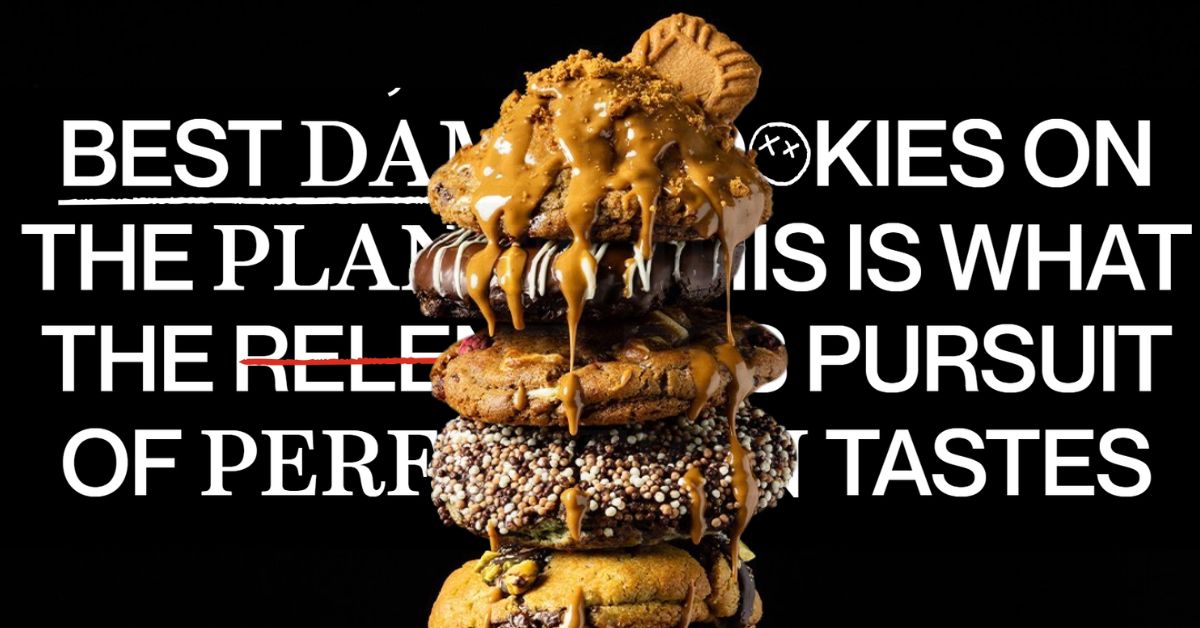
A masterclass in scarcity, status, and storytelling in direct-to-consumer food
🧐 Estimated read time | 5 minutes
Executive Summary
Last Crumb is a direct-to-consumer luxury cookie brand based in Los Angeles, offering a dozen cookies for $140 and routinely selling out within minutes. Despite launching with no paid advertising, the brand achieved rapid traction through a drop model, premium packaging, irreverent storytelling, and a strong emotional connection with its audience.
This case study explores how Last Crumb turned an everyday product into a cult luxury good by mastering the psychology of exclusivity, identity signaling, and narrative design.
Company Overview
| Founded | August 2020 |
|---|---|
| Headquarters | Los Angeles, California |
| Product | Limited-edition luxury cookies |
| Price Point | Approximately $140 per box (12 cookies) |
| Sales Model | Weekly limited drops |
| Key Metrics | 200,000+ waitlist, $1M+ in early sales, zero paid media |
Business Objective
To create a high-margin, category-defining food brand that offers:
- Demand driven by scarcity and anticipation
- A luxury experience inspired by fashion and fine dining
- Organic virality through packaging and storytelling
- Deep customer loyalty rooted in identity and exclusivity
Strategic Insights
1. Positioning: Reframing the Category
Last Crumb deliberately avoids being seen as a food brand. It is positioned as a lifestyle object, a flex, and a reward. Instead of emphasizing traditional product qualities like freshness or handmade ingredients, the brand leans into provocation, humor, and rebellion. Their messaging challenges nostalgic notions of “grandma’s cookies,” not by competing on quality, but by mocking the sentimentality entirely.

This creates psychological distance from every other brand in the space. The cookies are not described in terms of ingredients. They are introduced like characters in a story, each with a name, voice, and attitude.
Psychology in play: Identity signaling
Consumers do not purchase a cookie. They purchase an experience that confirms something about their taste, confidence, and sense of humor.
2. Scarcity as Strategy: The Drop Model
Borrowing from streetwear and sneaker culture, Last Crumb uses limited product releases to build hype and demand. Customers must join a waitlist and compete for access to weekly “cookie drops,” with timers counting down the seconds to launch. Drops consistently sell out in minutes.
This scarcity is not accidental. It is engineered through the friction between production limits (the cookies are handmade in small batches) and the marketing strategy, which amplifies desire beyond what the brand can deliver.
Psychology in play: Fear of missing out
When something is scarce and socially desirable, it becomes more emotionally valuable. Customers are not just buying cookies. They are winning access.
3. Packaging as Theatre

The product experience begins long before tasting. From the moment the customer receives the shipping box, the performance begins.

- Oversized matte black rigid box with collage graphics
- Cookies positioned at a 45-degree angle for visual impact
- Individually wrapped cookies with batch serial numbers
- A printed magazine included with stories behind each flavor
Every detail is optimized to create an unboxing moment worth sharing. The product is designed to look luxurious, mysterious, and provocative. It is not food. It is a collectible.
Psychology in play: Sensory priming
The visual and tactile details of packaging shape perception before the product is even consumed. The expectation of luxury influences the experience of taste.
4. Copywriting as Differentiation
Last Crumb’s storytelling breaks every rule of conventional food marketing. Instead of listing ingredients or health claims, each cookie has a name like “Netflix and Crunch,” “What the F*ck Velvet,” or “The James Dean.”


Descriptions read more like short fiction or stand-up comedy than product blurbs. Some describe fictional family drama. Others are filled with brash humor or poetic exaggeration. The actual flavors are almost secondary.
Psychology in play: Emotional anchoring through narrative
Customers remember stories more than features. And stories that make them laugh, feel clever, or feel seen are far more persuasive than taste notes or ingredient lists.
5. Word-of-Mouth: Designing Shareability
Last Crumb does not need to ask for user-generated content. It engineers it. Customers receive a “creative brief” in the form of the unboxing ritual. Each cookie has a name, a look, and a narrative. Each element encourages photo and video content creation. Alexandria Ryan’s viral tasting video, among others, is proof that the product itself becomes the content.
With no paid ads, Last Crumb generated more than one million dollars in sales in its first three months.
Psychology in play: Social capital
People share things that make them look cool, informed, or early. Every cookie drop gives them a reason to post, flex, or be part of the in-crowd.
Results
| Metric | Performance |
|---|---|
| Waitlist | Over 200,000 people |
| Time to Sell Out | Under 5 minutes per drop |
| First-Year Revenue | 8-figure range (undisclosed) |
| Marketing Spend | Zero paid advertising |
| Conversion Levers | Exclusivity, storytelling, packaging |
| Retention Strategy | Concierge membership, flavor testing access |
Lessons for Other Brands
- Perception defines value
A $12 cookie can be irresistible if it feels like a luxury. Start with the feeling, not the price. - Scarcity creates status
Limited availability does not reduce sales. It raises perceived value and intensifies desire. - Storytelling outperforms selling
Replace feature-based messaging with character-driven narratives. People remember stories. - Packaging is a growth engine
Design your product to be shared. If it looks iconic, it travels faster than any ad campaign. - Category rules are optional
You do not need to follow your industry’s conventions. You just need to rewrite them with intention.
📌 Pin this for later

Conclusion
Last Crumb is not just a cookie company. It is a performance brand that exists at the intersection of food, fashion, and storytelling. Its success is not built on product quality alone, although the cookies are widely praised. Instead, it is built on emotional engineering, where scarcity becomes anticipation, packaging becomes theatre, and every bite is part of a larger story.
The brand’s rise offers a compelling blueprint for how to build desirability into the DNA of any product. Even one as humble as a cookie.
If luxury is a feeling, Last Crumb has mastered how to bottle it…and then bake it.
Shoutout! Brand design and identity by Truffl, the creative studio behind Last Crumb’s unapologetically luxe presence.
Love this post? Pin it!

Other Posts You May Like
-

How Last Crumb Made Cookies a $140 Luxury Obsession
-

The Street Art Dilemma: Illegal, Beautiful, and Unforgettable
-

Polyester Is the New Pill. And We Didn’t Consent
-

Capitalism, Creativity, and the Music Industry: A Crisis of Value
-

Why Are Girls Still Paying More? The Pink Tax, Exposed
-

Why Are We So Mean Online? A Love Letter to the Worst Corner of the Internet
-

How to Make Big Money in Your Own Small Business
-

The Brand Next Door: Notpla
-

The Brand Next Door: Playhouse MD
-

Twitter Co-Founder’s New App Bitchat Promises Messaging Without Wi-Fi
-

How Labubu Went From Weird Toy to $150K Must-Have: The Marketing Masterclass
-

What Keeps Me Going: 8 Habits for Emotional Survival
Planning a trip? I got you.
-

Belgrade in 3 Visits: A Love Letter in Layers
-

The Ultimate Day Trip in Greece: Swim the Acheron
-

Why Everyone’s Falling in Love with Parga (and You Will Too)
-

Marmore Falls: Italy’s Wildest Waterfall, A Family Story, and Why You Need to Visit Now
-

Ljubljana Travel Mistakes to Avoid + What Made Us Fall in Love
-

Why You’ll Fall in Love with Tivoli’s Villa d’Este
-

The Magic of Everyday Life: A Travel Guide to Noticing More
-

Lost in Venice: A 24-Hour Love Letter to the Floating City
-

24 Hours in Zagreb: The Full Experience
-

Still Practiced, Still Powerful: 26 Superstitions From the Heart of Naples
-

Eat Like a Roman: Hidden Food Gems Locals Swear By
-

9 Things You Must Know Before Dining In Italy