🧐 Estimated read time | 8 minutes
Luxury is often associated with conspicuous consumption and overt displays of wealth and status. The more bling, the better. The more monograms, the better. However, a new trend has emerged in the last couple of years that challenges this traditional notion of luxury: quiet luxury.
“quiet luxury, stealth wealth, or the point-blank, low-key rich bitch“– Diana Pearl for BOF
Quiet luxury is the new-age minimalism that emphasizes understated elegance, quality over quantity, and a more subtle expression of status. Quiet luxury is easy elegance – a cashmere coat thrown on top of nice navy trousers and a white silk shirt. Quiet luxury is the Patek Philippe or Vacheron Constantin watch – a watch that is often passed down from generation to generation as a symbol of family tradition and status – recognized for its quality and craftsmanship rather than flashiness.
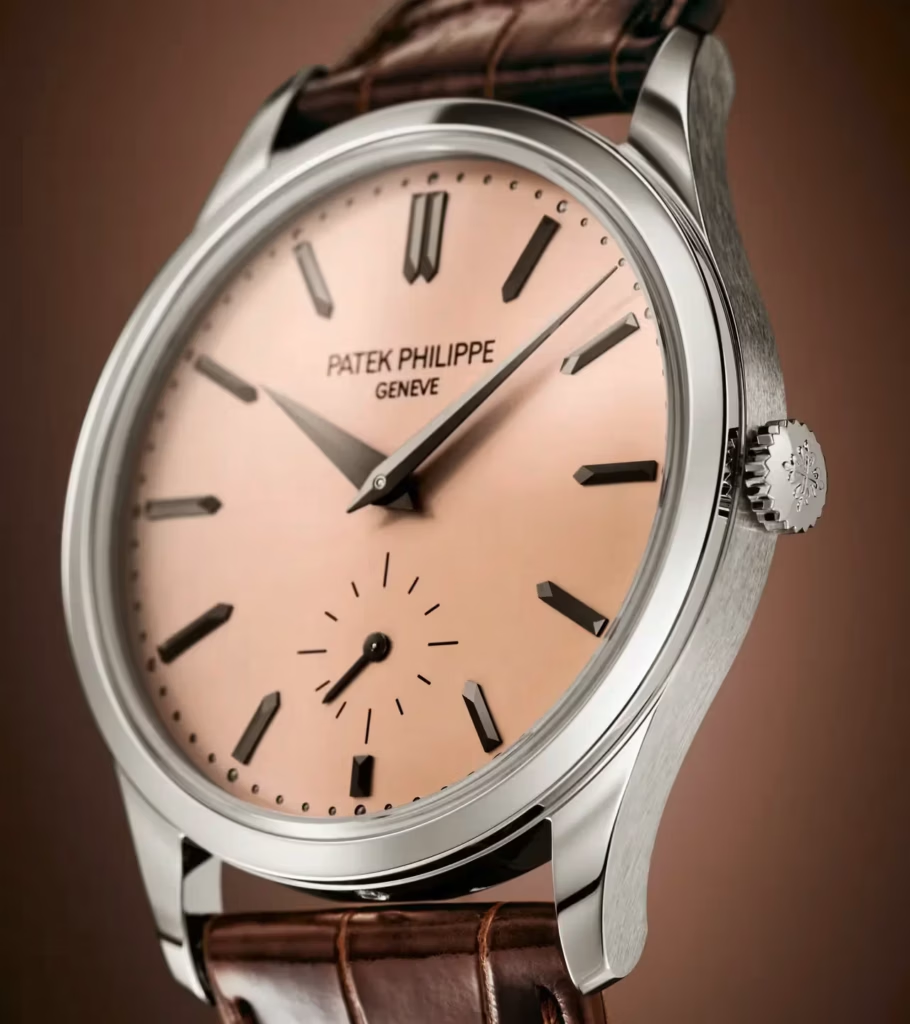
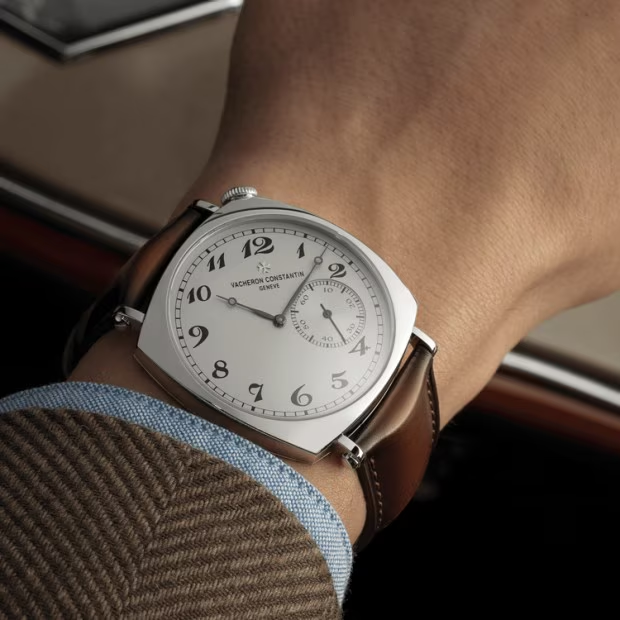
Quiet luxury is everything that Japanese cuisine represents – quality ingredients, simple preparation, and understated presentation.
While the term itself feels fresh, the concept is anything but. In truth, quiet luxury has always been the real luxury. Long before TikTok declared “stealth wealth” a trend, true connoisseurs of refinement understood that less can be more. The recent cultural spotlight simply gave a name to something that had always existed in the margins.
As major luxury houses under multinational holdings and conglomerates like LVMH expanded into suburban malls and pushed logos into the mainstream, exclusivity took a back seat to accessibility. Brands sought growth; in doing so, they lost exclusivity and appeal. Quiet luxury is, in part, a reaction to that shift.
The Birkin and the Quiet Paradox
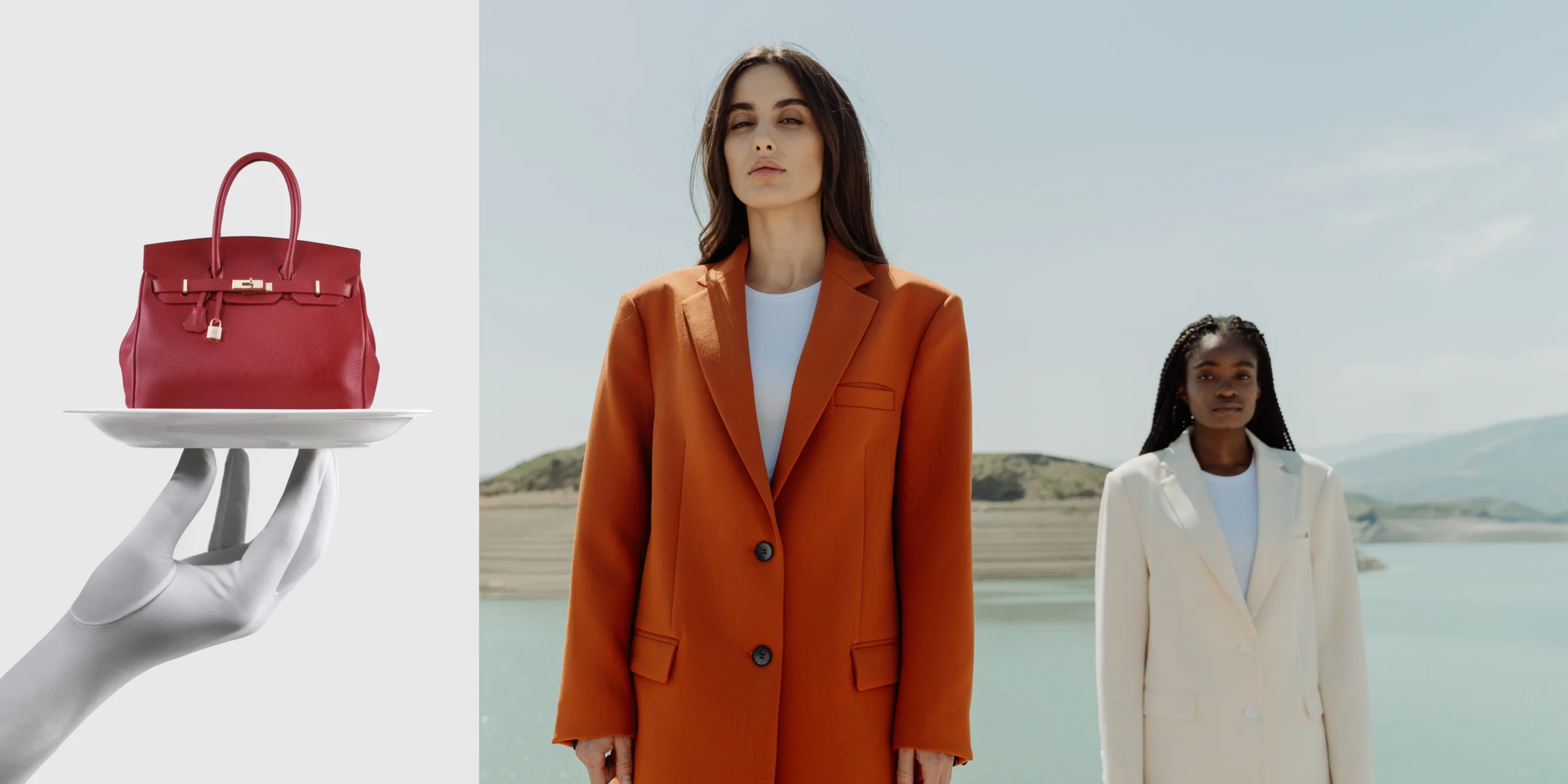
Take the Hermès Birkin: the pinnacle of quiet luxury. Its design is minimal, its quality unmatched, and its production deliberately scarce. And yet, this same bag saturates social media. It’s both exclusive and overexposed—a symbol of craftsmanship, but also of contradiction. A reminder that even the quietest luxury can become loud in the wrong context.

Is Quiet Luxury Really Quiet?
On the surface, quiet luxury seems oxymoronic. How can something be both luxurious and subtle? Isn’t luxury meant to be seen?
Not exactly. Quiet luxury isn’t about modest living—it’s about a different kind of status: one rooted in discernment, legacy, and appreciation of the finer details. It’s a response to the noise of mainstream luxury culture—a move away from spectacle and toward sophistication.
The answer is not as straightforward as one might think. Quiet luxury is not about denying oneself luxury or living modestly. Rather, it is about a different kind of luxury—one that is more sophisticated and discerning, a true appreciation of the finer things in life. In many ways, it’s a response to the noise of mainstream luxury culture—a move away from spectacle and toward sophistication.
Minimalism Reimagined
Take the rise of minimalist luxury, for example, a wonderful market for those who seek simplicity, functionality, and clean design. Minimalist luxury products are often made with high-quality materials and impeccable craftsmanship, but they lack the flashy logos and branding that are typical of mainstream luxury brands. By eschewing logos and other overt displays of status, minimalist luxury brands allow consumers to express their taste and sophistication in a more subtle way.
Experiential luxury is another expression of this shift. Instead of collecting things, consumers are collecting moments: bespoke travel, wine tastings, private art shows. It’s not about showing off—it’s about showing up, fully present.
The Psychology of Quiet Luxury
So why is quiet luxury so appealing?
For one, it taps into a deep desire for authenticity. In a world of mass-produced goods and homogenized experiences, new-age minimalism allows consumers to express their unique tastes and preferences in a more subtle and personal way.
Second, it reflects a yearning for self-restraint. In an age of overconsumption, quiet luxury promotes quality over quantity. It’s a deliberate pivot toward intentional living—an aesthetic of maturity and moderation.
Finally, and paradoxically, quiet luxury is still about status. It just codes that status differently. It’s socially acceptable, even admirable, to choose a hand-stitched coat over a logo-covered jacket. To the untrained eye, it’s “just a coat.” But to those in the know, it speaks volumes.
The Threats to Quiet Luxury
But as with anything coveted, quiet luxury faces the risk of becoming… mainstream.
Its appeal lies in its subtlety, its exclusivity. But the more it’s talked about, shared, and hashtagged, the more that mystery fades. It walks a delicate line between being accessible enough to inspire and exclusive enough to remain desirable.
Brands must tread carefully—curating, not mass-producing; whispering, not shouting.
Take Totême, the Swedish minimalist luxury brand that opened its first flagship in Beijing in March 2025. Despite its expansion into mainland China, Totême has preserved its minimalist identity and emphasis on craftsmanship, striking that delicate balance between being “accessible enough to inspire and exclusive enough to remain desirable”.
Status, Still Recognizable
Even without logos, quiet luxury signals wealth to a trained eye. The Row, founded by Mary-Kate and Ashley Olsen, has become a textbook example. The brand not only mirrors their refined personal style but has also become a hallmark of understated elegance; anyone familiar with The Row can spot the meticulous craftsmanship of one of their cashmere coats from a mile away.
Similarly, Loro Piana is known for its unparalleled use of rare materials—vicuña, baby cashmere, merino wool. Meanwhile, pieces like Khaite’s signature jeans—frequently worn by Kendall Jenner—exemplify how even without visible logos, a garment’s design and detailing can make it quietly iconic.


Of course, this concept extends far beyond fashion. Take, for example, an exclusive membership club—its prestige may be known only to a discerning few, without the need for overt advertising. The essence of quiet luxury has also found its place in the world of hospitality. Brands like Mollie, Hoshinoya, and The Ritz-Carlton exemplify this approach: while they offer all the amenities and comforts of high-end hotels, they do so with subtlety and sophistication, prioritizing exceptional quality and service over ostentatious branding or excess.
So, is quiet luxury really quiet? The answer is not a simple yes or no. Quiet luxury is a paradoxical concept that can be both conspicuous and subtle at the same time. While it may not have overt branding or logos, stealth wealth can still be a form of status display that is recognizable to those in the know. The Birkin bag remains a very simple luxurious tote bag, but whether it’ll be quiet depends equally on both the owner and the watcher.
Overall, the rise of quiet luxury is a reflection of a changing luxury landscape. No matter whether it is due to a trend, a desire to look more sophisticated or a significant shift in consumers’ mindset, they are demanding a more understated and refined form of luxury that emphasizes quality, authenticity, and individuality. While the minimal aesthetic trend may not be everyone’s cup of tea, it represents an important shift in the way we think about luxury and what we now consider a luxurious life.
So what do you think? Is quiet fashion really quiet? Join the conversation in the comments section below.
FAQ
What is quiet luxury? It is a high-end lifestyle that values understated elegance, discretion, and exclusivity over ostentatious displays of wealth. It’s about quality over quantity and creating a sense of luxury that is subtle and refined
What are some examples of brands that embody quiet luxury?
Brands that embody the aesthetic include Max Mara, the Row, Loro Piana (see picture👇), Tove, and Brunello Cucinelli. These brands are known for their exquisite craftsmanship, attention to detail, and focus on quality materials.
Who are the typical consumers of quiet luxury products and services? The typical consumers of subtle luxury products and services value quality, craftsmanship, and exclusivity over showiness and extravagance. They are often sophisticated and discerning and appreciate the finer things in life.
How does one achieve a quiet luxury lifestyle? Achieving such a lifestyle involves focusing on quality over quantity and investing in high-end products and experiences that are understated and refined. It’s about choosing well-made and crafted products from the finest materials and opting for exclusive and memorable experiences.
For instance, the Australian skincare brand Aesop has become known for its minimalist packaging and exceptional formulations. The brand’s understated approach to luxury has earned it a cult following among beauty aficionados who appreciate quality and authenticity.
How does quiet luxury relate to sustainability and ethical consumption? Brands that embody new-age minimalism often place a strong emphasis on quality, which can translate into products that are built to last and have a lower environmental impact. Additionally, some brands may use sustainable or ethically sourced materials in their products.
How can one incorporate elements of quiet luxury into everyday life? By choosing high-quality, well-made products crafted from the finest materials. It’s also about focusing on experiences that are exclusive and memorable, such as a special meal at a top-tier restaurant or a weekend getaway at a boutique hotel.
Love this post? Pin it!


