🧐 Estimated read time | 5 minutes
It happened in one of the cleanest, most controlled spaces I had ever set foot in. The floors gleamed. The air was crisp with temperature control. Visitors spoke in polite, museum-approved decibels. And right in the middle of this pristine calm, I stood face to face with an original Banksy. The piece was mischievous, sharp, even a little absurd. It made me laugh out loud. Then, it made me pause.

Because suddenly, in the middle of the Moco Museum in Amsterdam, I realized I was admiring something that, not so long ago, might have been scrubbed off a city wall before anyone thought to take a picture. This was the moment I began to question everything I thought I knew.
Why do we call it art here but criminal mischief there?
The line between vandalism and art isn’t a line at all
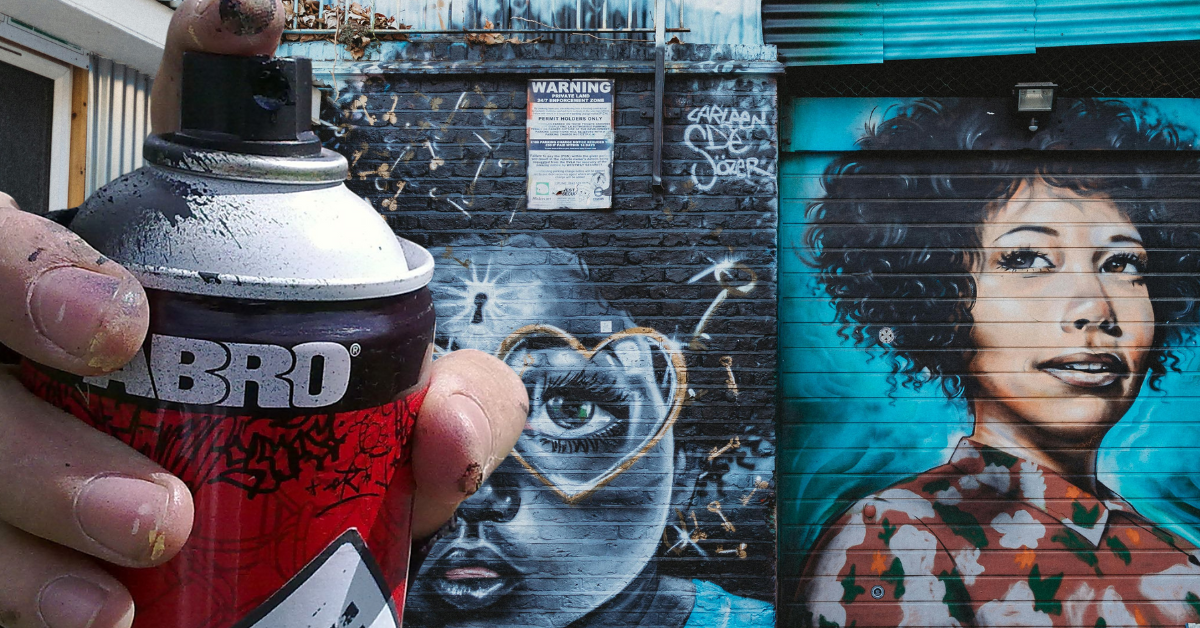
Graffiti does damage. It costs cities money. It appears without permission. At its worst, it is angry, profane, even intentionally jarring. But to reduce it to just vandalism feels like describing the internet as just a collection of wires. Technically correct, but entirely missing the point.
A name scrawled across a train door? Illegal. A technicolor mural that brightens the side of an abandoned factory? Also illegal. But does either one automatically fail to be art? The question becomes not what it is, but where it is.
Why one scribble offends and another one inspires
Tagging is fast. It’s about identity and repetition. It claims space the same way dogs mark trees, though with more style and fewer hygiene concerns. You’ll see it on lampposts and shutters, the visual equivalent of background noise.

Murals, by contrast, are layered. Intentional. Sometimes commissioned. Sometimes not. Always designed to stop you mid-step.

And yet, in the eyes of the law, both carry the same weight. The spray can does not ask about artistic intent. So why does one end up framed on Instagram while the other sparks a complaint to the city?
What happens when you take the street out of street art
Art historian Victoria Alexander once proposed five criteria for art: it must be visible, expressive, communicative, enjoyable, and defined by context. That last one, context, does the heavy lifting.
In the museum, I admired a Banksy that checked every box. I laughed. I photographed it. I shared it with friends. Later, I wrote about it. But if I had passed the same image on a decaying alley wall in East London, would I have reacted the same way? Maybe. But maybe not. Because context is powerful. Put a spray-painted rat behind museum glass and it becomes social commentary. Put the same rat outside a coffee shop and someone calls maintenance.
Once graffiti enters a museum, it gains legitimacy. It becomes worth preserving. Worth studying. Worth selling. But it also loses something essential. The grit. The urgency. The defiance.

A German curator once observed that graffiti in a museum can feel “sterile.” Like a tiger behind glass. Still striking, but declawed. Street art was not born to be admired in silence. It was born to interrupt. To provoke. To live, briefly and loudly, in spaces that never asked for it.
The real reason we still flinch at graffiti
Scratch beneath the surface, and our resistance to graffiti often comes down to discomfort. It is unpredictable. It takes space without asking. It speaks out of turn. Sometimes it speaks with rage. Other times with joy. Either way, it rarely asks permission.
And perhaps that is exactly what makes it necessary. If you want to control the message, you commission a mural. If you want the truth, you watch what appears overnight on a wall no one owns.
Five palces that treat graffiti with respect. Not reprression
For those who want to see graffiti without the legal gray area, a few institutions are starting to catch on.

Moco Museum (Amsterdam)
This is where my own shift began. Works by Banksy, JR, and other artists who turned the sidewalk into a gallery. The space itself feels rebellious, even while curated.

Urban Nation (Berlin)
A full museum devoted to street and urban art, with rotating exhibitions from both local voices and global icons.

Museum of Graffiti (Wynwood, Miami)
The World’s First Museum Dedicated to Graffiti

STRAAT Museum (Amsterdam)
Housed in a former shipyard, STRAAT feels like the street brought indoors. Massive murals, raw energy, and works painted directly onto the walls make it more alive than curated. This is street art on its own terms.
So, is it art? Or just paint on a wall?
That might be the wrong question. Maybe art is not defined by location, legality, or even longevity. Maybe it is defined by honesty. Graffiti tells the truth quickly, before anyone can stop it. It is messy, urgent, and often anonymous. It is what happens when people speak in color because no one will give them a microphone.
If art holds up a mirror to the world, graffiti does it without flattering the angle.
It does not ask for a caption. It does not wait for a gallery. It simply shows up. And maybe that is the purest kind of art there is.
Love this post? Pin it!

Other Posts You May Like
-

Tabi Shoes: The Most Controversial Footwear In Fashion History
-

Belgrade in 3 Visits: A Love Letter in Layers
-

How Last Crumb Made Cookies a $140 Luxury Obsession
-

The Street Art Dilemma: Illegal, Beautiful, and Unforgettable
-

Polyester Is the New Pill. And We Didn’t Consent
-

New Finds, Big Crushes: The Bag Brands I’m Loving Right Now
-

Capitalism, Creativity, and the Music Industry: A Crisis of Value
-

Why Are Girls Still Paying More? The Pink Tax, Exposed
-

Why Are We So Mean Online? A Love Letter to the Worst Corner of the Internet